“America’s Heartland” with its patchwork of big industrial cities & farming towns, lying midway between the Appalachians & the Rocky Mountains & north of the Ohio River.
The historic house museums in the Midwest U.S. that you will see in these videos were built by industrial magnates who took advantage of the natural resources (coal, oil, iron ore & limestone) which the area had in rich abundance as well as the immigrants who fled poverty to work in their huge factories. Emerging transportation arteries, first the canals of the Great Lakes & then the railroads, linked the Midwest with Eastern markets & firmly established it as part of the industrially expanding North allowing many to amass great fortunes.
So why would a woman whose life is consumed by bungalows be directing you to visit Victorian homes? Because I love cultural evolution. The Arts & Crafts Movement was born as a reaction to the excesses of Victoriana but you see some of the elements of these homes in a bungalow. Many of the grand homes used materials & technology that were cutting edge for their time. Twenty years later, these developments were common place in more modest dwellings.
LET’S VISIT SOME HOUSE MUSEUMS!
Columbus Neighborhoods: Sears House Kits (4:21)
WOSU Public Media
Discover Sears houses that residents of Columbus, Ohio still call home, sweet home.
Top 8 House Museums in St. Louis Missouri! (6:02)
This House
A lovely assortment of over-the-top houses! You might want to adjust the playback speed to half.
Touring the Mansion that ALMOST Changed History (16:39)
This House Tours
Almost?
Tour the Historic (and haunted?) Vaile Mansion
Will we see the ghost?
Preservation Chicago Tours the Arlington Deming Historic District, Chicago (46:33)
Sarah Belle Wilson House
A tour of modest frame homes to enormous mansions in one of Lincoln Park’s most important historic districts, developed following the 1871 Great Chicago Fire.
STAY IN THE BUNGALOW KNOW!!!
Sign up for our newsletter & receive our FREE E-book, 7 VITAL Things to Do Before You Hire a Contractor.
I have learned a great deal about the Southeast U.S. from visiting house museums. After having read so much material on old houses, it is wonderful to visit the complete homes, most restored with the best preservation practices. Often they contain at least some original furniture & household goods. Generally you are provided with information about the family & their contributions to local history as well as a glimpse into their lives & the life & culture of the time.
I live in the Southeast, but I have toured house museums all over the U.S. & find each experience to be enlightening & entertaining. The videos are broken up by region so that you can hopefully, hop in your car & for a weekend getaway in time. This one, about the Southeast contains videos of many of the places I have been. Check back! I’m not done yet!
LET’S VISIT SOME OF THE HISTORIC HOUSE MUSEUMS IN THE SOUTHEAST U.S.
FLORIDA
Cracker Country – A rural Florida living history museum (2:03)
The City of Tampa
This was my first taste of Florida history after having moved here from Los Angeles. I was rattled by the move & the 8 back-to-back hurricanes. Visiting these early homes served to ground me. My curiosity is always my best friend & Cracker Country opened wide the door to a whole segment of history & architecture with which I had no familiarity. Hm-m-m. Maybe
Truly one of the most stunning & creative houses in the world, the house is only one attraction in the Ringling complex in Sarasota, Florida. In addition to viewing the video, take a look at my post on the other attractions. If you visit Florida, you cannot miss experiencing The Ringling!
Heritage Village in Largo Fl. a trip back in time (15:03)
Dre & Lita’s Travel
This is the second place I visited when I came to Florida. I was beginning to feel more at home, in the company of these remnants of our past & the people who care for them.
Turner Bungalow (9:18)
Pinellas County
Relocated to Heritage Village in Largo, Florida in 2014, now, nearly 10 years later, the restoration is complete & you can tour this bungalow, built in 1915. In the Village museum are displayed Turner family artifacts, covering every decade since the home was constructed in 1915.
KENTUCKY
Victorian House Lovers Tour of the Conrad Caldwell House Museum Louisville, Kentucky (3:22)
Victorian House Lovers
Constructed in 1895, the richly ornate Conrad-Caldwell House in one of America’s largest concentrations of Victorian homes, is a site of cultural & architectural significance to the city of Louisville.
I hope that you will have the opportunity to visit the historic house museums of the Southeast U.S. The rich history of the area is represented in these old houses & they contain much information about the development of the architecture, technology & culture that created our world today. They answer the question, WHY PRESERVE?
STAY IN THE BUNGALOW KNOW!!!
Sign up for our newsletter & receive our FREE E-book, 7 VITAL Things to Do Before You Hire a Contractor.
The best thing about a bungalow is its old neighborhood with row after row of historic Arts & Crafts homes, each one different from the other & the fellowship to be found there. Home tours, potlucks, monthly meetings- moving into a bungalow neighborhood gives you the opportunity to meet some wonderful new people, form strong friendships & have some great adventures.
Often, these associations have a preservation committee through from you can learn a great deal. I also urge you to participate in that committee for all the same reasons as those mentioned above. And, if they don’t have a historic preservation committee, you can start one one. Don’t know what to do? I’d be so happy to teach you! Here’s an article about some of the activities we hosted.
LET’S VIEW SOME GREAT BUNGALOW NEIGHBORHOODS!
Celebrating 100 Years of Chicago Bungalows
Chicago Bungalow Association
A delightful & warm video about Chicago bungalows.
Check out my article on these charming homes & the vibrant neighborhoods represented by the Association.
“An illustrated monthly magazine in the interest of better art, better work and a better more reasonable way of living.”
~The Craftsman the magazine of the Arts & Crafts movement, edited by Gustav Stickley, was published from October 1910- December 1916 & was taken over by Art World in 1917.
Stuckley’s interest in furniture began as a carpenter, but inspired by the Arts & Crafts Movement of the late 1800’s in England, he created a whole design movement giving identity & voice to the Movement in America. Through his ideology of simplicity, craftsmanship & wholesome living, he built a home decorating empire including a large store, modeled on today’s department store, featuring his furniture & metalwork. In the store was a beautiful restaurant where they served fresh food that was grown on his farm.
Stickley promoted his goods & his ideals through The Craftsman magazine which featured articles about architecture, interior design & about living well. A vehicle to educate the public on the Arts & Crafts Movement, the first two issues were devoted to William Morris & John Ruskin. Articles on Morris include praise for Morris as a poet, a storyteller, an artist & a handicraftsman, as well as “an unprejudiced man of wealth, culture & position” & “versatile genius.” Stickley laments Morris’ recent passing calling him – “a lost leader, friend & brother.” I consider myself a Morris groupie, but I do not feel that I ever knew him before I read Stickley’s words.
With that, let’s pause to consider the fact that in the first eight volumes of The Craftsman, from October 1901 to September 1905, Irene Sargent, an American art historian, made eighty-four contributions, & nearly all of its first three issues were written primarily by her. An academic, her aesthetic is succinctly expressed by a quote she published of Thomas Carlyle: “ornament is the first spiritual need of barbarous man.” This book, a chronology of Sargents’ life, by Cleota Reed, was hand-printed by Andre Chavez of The Clinker Press.
It is my feeling that though it is likely that the Morris tributes above flowed from her pen, Stickley truly loved & understood the European Art & Crafts Movement & was profoundly influenced by it, considering it his mission to bring it to America. Being the editor & publisher, you can be assured The Craftsman was Stickley’s voice, as often expressed by Sargent.
However, as much as Stickley admired Morris, rather than being another child of the medieval period on which the European Movement was modeled, Stickley’s uniquely American, colonial-inspired, cultural aesthetic was clear from the magazine’s inception & grew ever bolder with each issue.
What I consider to be the most valuable aspect of the American Arts & Crafts Movement was its focus on simplicity, honesty, & cooperation as the ingredients of living well. He was a proponent of building in harmony with the environment by using natural materials & was also an early supporter of conservation. You can see an example of the The Craftsman magazine’s beautiful & eloquent content here.
He encouraged his readers to become proficient in manual tasks like carpentry even publishing plans of how to build his furniture designs at home. His articles provided guidance on doing handcrafted work such as embroidery & there was much written on gardening. Stickley was the major tastemaker of his age & in my humble opinion, taught folks to live fulfilling lives centered on creativity, self-sufficiency, health & family.
An example of articles contained in the magazine can be viewed here, a charming article about Christmas & another informative one about lighting, a very new technology when it was written.
And, please take a look at these videos about him, his life & work. I have included a trailer of the documentary film, Gustav Stickley: American Craftsman, available on Prime Video. It contains much of what you need to know about the Movement in this country. What I have written here is so abbreviated that I am feeling a bit disrespectful, but if it encourages you learn more about this brilliant & heartful man, then my little article has done its job.
STAY IN THE BUNGALOW KNOW!!!
Sign up for our newsletter & receive our FREE E-book, 7 VITAL Things to Do Before You Hire a Contractor.
CHRISTMAS DECORATIONS FROM WINTER’S GARDEN
December, 1911
In tracing the custom of decorating the church and home with green boughs, vines and flowers on Christmas day—a custom dear to many people in many lands—we wander through both Christian and pagan eras. The records disclose curious, interesting and beautiful facts and fancies of historical and poetical importance. Some writers see in this custom a yearly commemoration of Christ’s entry into Jerusalem when the people waved pine branches as token of their rejoicing.
In Isaiah we read, “The glory of Lebanon shall come unto thee, the fir-tree, the pine-tree and the box together to beautify the place of my sanctuary.” Nehemiah commanded the people, on some occasion of rejoicing, to “go forth unto the mount and fetch olive branches and myrtle branches and palm branches and branches of thick trees.”
It seems strange that in spite of these authoritative quotations and incidents, the early Christians forbade the use of flowers and branches in their church, no matter what the occasion. The Puritans also denounced the use of flowers or greens as “vain abominations” for the same reason—namely, that the custom was said to be of pagan origin. “Trymming of the temples with hangynges, flowers, boughs and garlondes was taken from the heathen people, whiche decked their idols and houses with suche array,” wrote Polydore Vergil.
The reason among the Druids for bringing in bits of evergreen from the woods and adorning the house is a most charming and lovable one—”The houses were decked with evergreens in December that the sylvan spirits might repair to them and remain unnipped with frost and cold winds until a milder season had renewed the foliage of their darling abodes.” How gracious a way of luring the shy, sweet wild-woods spirits into the homes of men!
The Druids with ceremonies of great solemnity used to collect mistletoe “against the festival of winter solstice.” Only the oaks bearing mistletoe were sacred to this ancient order of men, and they made solemn processions to such oaks, a prince of the order cutting the mistletoe with a golden sickle. It is recorded that the people’s reverence for the priests proceeded in great measure from the cures which the priests effected by means of this curious green plant of the pearl-like berries. It was collected thus ceremoniously by the Druids because it was supposed to drive away evil spirits.
Sir John Colbatch boldly said that “it must have been designed by the Almighty for further and more noble purpose than barely to feed thrushes or to be hung up surreptitiously to drive away evil spirits.”
But whatever the origin of decking our homes with holly, mistletoe or with branches of any green plant hardy enough to carry with it a hint of immortality by remaining fresh and green throughout the apparent death of the world during the winter—the custom is now well established, and who would willingly let it slip into oblivion! It would seem strange indeed not to welcome this child’s festival,—the holiest festival of the year’s calendar,—with fragrant boughs from the forest set at our doorways and windows and on our altars. It is a fitting and beautiful way to symbolize our love and worship of the One who made immortality credible.
Nature has set many a lovely plant in her winter garden of rich perpetual green, giving some of them an added charm of scarlet berry, or berry of blue or white or purple. Some have hardy, glossy leaves of wonderful shapeliness, some of them have fragrant needles, some exhale rare aromatic incense, some even put forth hardy flowers of glowing crimson or purest white.
Of those bearing bright berries that we can gather from the woods or fields to adorn our homes at this Christmas season, perhaps the general favorite in the East is the holly—in the West it is the toyon. These two glossy leaved bushes of the scarlet berries are too well known to need words in their favor. The mistletoe of the South and of the West should be mentioned in the same breath with these favorites, for they are closely associated in our minds. The “Lord of Misrule” and the “Abbot of Unreason” [both terms apply to a peasant or low level church official appointed to be in charge of Christmas revelries, which often included drunkenness and wild partying] have claimed these white Christmas berries from the time of their first hilarious coronation day when fate was precipitated with surety upon the head of the maiden of their merry courts who was caught under the fruiting branch of their wand—the mistletoe bough!
The snowberry that holds large waxy berries through most of the winter is well known in both the East and the West and lightens dark corners of rooms in most decorative way, looking like miniature snowballs—that do not fade away at the approach of fire. Barberries have won a well-deserved popularity as Christmas decorations, so also has the winterberry or black alder with its red fruit. Several of our thorn bushes show bright berries in the whiter. The viburnums with black berries, the wild currant with small but pretty red fruit, the spindle tree with pink berries and the orange and red bittersweet can be obtained with a little search of open groves and sheltered pastures.
Among the evergreens whose beautiful leaves are polished to glossiest perfection by Jack Frost, are the magnolias, rhododendrons, mountain laurel, bay laurel, madrone. The pepper tree of the Southwest drips with red berries as well as sparkles with shining leaves. The checkerberry also combines red berries and polished leaves, though it is a tiny humble little plant compared to the showy pepper tree. Galax leaves are coming into favor, and deservedly so, for they are of the richest, glossiest dark green and bronze, and their heart-shaped surfaces are beautifully veined, a fine example of natural engraving.
As to vines with which to drape mantel, table and picture, the wild smilax of the South and the ground pine of the North cannot be surpassed, for they are charmingly graceful, retain their fresh color for a long time and have decorative qualities wherever placed. The Christmas fern which grows quite universally throughout the country is another graceful plant that lends itself graciously to decorations of every nature. The winter garden shoves nothing lovelier than the shapely green fronds of this fern, and it retains its rich green whether covered with snow or taken into the warm atmosphere of the home.
Besides all these green things that are to be had as reward of a walk in field or forest, are the evergreen trees of all kinds, the firs, spruces, arborvitaes, pines, hemlocks, whose balsamic fragrance add so much to Christmas cheer. The Christmas rose should be better known—should be made to bloom in our gardens as well as in Nature’s garden.
Delicate mosses, lichens and little rock ferns can often be found on the sheltered side of rocks, that are as green as when summer holds sway over our land.
With such an array of green growing things to choose from, things full of sentiment, of dear associations, of rare beauty, why not give ourselves the joy of a search for them through winter fields and woods ? Would not such a search be just about the best part of the season’s merry making. ”Would we not be entering more into the spirit of Christmas by going out to meet it, as it were, by searching for these aromatic symbols of immortality and bringing them into our homes, rather than by unromantically ordering wreaths, vines and branches from the florist’s.”
The Craftsman Magazine was the premier publication of the American Arts & Crafts Movement. Each article promotes a natural, simple lifestyle in beautifully expressive prose. Read my article on how I created my Craftsman Magazine Christmas here.
STAY IN THE BUNGALOW KNOW!!!
Sign up for our newsletter & receive our FREE E-book, 7 VITAL Things to Do Before You Hire a Contractor.
Life changes can interrupt the most heart-felt, best laid plans. A marriage, a divorce, a new baby, a job transfer, a lay-off, a family member in need of care, any one of these things can profoundly affect your circumstances.
So, after much soul-searching & considering options, it’s time to be selling your historic house, the one that was going to be your forever home. You want to ensure that it doesn’t end up in the hands of a flipper, (with my pardon to those who maintain & preserve historic features. You know that you are rare!) or the victim of someone who thinks that the plot of land on which your precious bungalow sits would be a prime spot for a marble clad McMansion.
So, how do you attract the right buyer when selling your historic house?
THE IDEAL HISTORIC HOUSE BUYER
Let’s pause to consider what your ideal buyer might look like.
1. They love all aspects of old houses.
2. They love old neighborhoods.
3. They understand that old neighborhoods have the potential to transition.
4. They are financially qualified to be able to easily get a mortgage.
5. Your home’s location is convenient for them.
6. Your home’s size & layout will suit their needs.
7. They have sufficient resources to deal with the issues that can be found in an old house.
So, how do you attract this buyer?
Another numbered list:
Lo-o-o-ong before you make this decision-
1. Research the history of your house & neighborhood. Dig deep. In our disconnected world, people are searching for connections. You want to make the builders & former owners of your home real & lovable. Read my article on researching your home’s history. It should provide you with the information you need to flesh out the cast of characters & bring them to life.
When the time comes, you will have an abundance of material to display in a beautifully arranged notebook with your other marketing materials. You might want to frame any images you find in period frames & hang them in a group. They’re your house’s family!
2. Collect a library of information on homes of your period. Study these materials while you live there. Display them with your other sales materials. You might want to include them as a gift to the new homeowners.
3. Learn basic principles of historic preservation so that you make the right choices. The general public is becoming more & more aware of preservation. They may not share your love of purple, but the right buyer will understand why you didn’t open up the kitchen.
4. Create an organized list of your service providers with all pertinent facts- contact info, pricing, skills, caveats.
5. Create a dedicated file for all repairs & improvements as you go along. I keep a “House Box” with all my receipts, service contracts, etc. Also keep a warrantee/instructions file for all appliances & systems in the box.
These will be included in your sales display.
6. Here’s a biggy. Most municipalities have historically designated houses. With all the research that you have done, you probably have sufficient information to apply for & be granted such a designation, at the local, state or even national level. This designation can go far in protecting your house, at least its exterior. There is nothing cannot be challenged in a court of law, but generally this designation will chase people away who want to seriously maul your house.
When I sold the Hare House, I made much of the fact that it was designated, in all its marketing. Most of the potential buyers who came to view it were very eager to own an important house, but I can remember showing it to a woman one day who slid in expressing her enthusiasm that it was on 1 1/2 lots. I don’t know what architectural mayhem she was envisioning but I happily pointed out its historic status. When she asked what that meant I cheerfully said, “The City of Los Angeles regulates all construction & maintenance. They fully control everything, but you pay for it.”
She didn’t make it past the entryway.
7. Connect with your neighborhood group. Older neighborhoods tend to have strong neighborhood associations. You will make good friends & learn much about the history of your area.
My participation in my neighborhood association allowed me to produce a historic documentary film about its origins. Its premier to a sell-out crowd at Tampa Theatre, one of America’s most elaborate movie palaces was the outstanding achievement of my preservation life.
In these groups, you will connect with local Realtors. If & when the time comes to put your house on the market, you want to know these folks well. I had a bit of a prickly personal relationship with the Realtor who sold the Hare House but I knew that she was the most knowledgeable, competent & connected & I didn’t think twice about hiring her. I was dazzled by her every move. Thanks to her large mailing list, the open house was flooded with old house loving people. Thanks to her connections, by the time of the open we already had offers. She had a great relationship with the agent of the buyer I liked the best & the whole transaction was astonishingly smooth.
I also recommend taking an active role in one of these groups. You can leave your neighborhood better than you found it.
7. Support local businesses. They are part of your community. Many of them are your neighbors. When the time comes, contact them about your house sale. They may have customers who like your area & would love to live there. Several in my neighborhood allowed me to display my sales fliers on their counters.
OH, DEAR!
Yes, this is a really long article. I have spent a week writing & re-writing it to make it concise but selling your historic house to the right buyer takes some planning & some work. Stick with me.
BEFORE YOU PUT YOUR OLD HOUSE ON THE MARKET
IF YOU HAVE NO $$$$ (Hey, it’s happened to all of us.)
1. De-clutter. Yard sale or donate anything that you do not need. Just get rid of it! This includes furniture.
2. Put away everything that’s left that you do not need to function daily. If you have a place to stash extraneous furniture items, stash them.
3. Leave out only the decorative items that truly enhance/complement the house. I have old family photos that I framed in period frames. These stayed & got many positive comments.
4. Free up storage as much as possible. If you look like you’re overflowing, it will read as being not enough storage for their stuff. This includes attic, basement, garage, kitchen- any place anything can be stashed. I know this conflicts with item 2. I have no solution to this, but better stashed in storage than in the house.
5. Clean the house from top to bottom. Use natural, unscented products. I clean everything in my house with white vinegar, full-strength in the bathroom & mixed with water elsewhere. (Make sure that you have good ventilation. It’s pretty acidic.)
Hit the walls where there are smudges, doors & door frames, & get behind any furniture that you can. And, yes, wash the dang windows!
Wash or shake out curtains & draperies. Vacuum the blinds.
Clean the kitchen so that anyone would feel comfortable eating off of any surface. Ditto the bathroom.
6. Rent a carpet shampooer & clean those carpets. Use unscented products.
7. Wash your sheets & mattress covers & your pillows if they are washable. Again, skip the scented products. I wash with baking soda, letting stinkier loads soak. I do not use fabric softener. It is made with cheap, petroleum-based ingredients & fragrance & is very unhealthful. Now’s maybe a good time to ditch it forever.
You want your house to look & smell fresh, fresh, fresh. Many people have (or wish to avoid) chemical sensitivities so skip the air fresheners. You don’t want to trigger an asthma attack in a prospective buyer!
It’s a spring cleaning on steroids!
8. Open your windows & turn on fans as much as you can. We’re going for fresh. (Remember?)
9. Clean litter boxes & keep them clean.
10. Tidy your lawn & gardens. This includes vehicles, yard equipment. Now’s a good time to sell or donate any that you do not use.
IF YOU HAVE $$$ TO SPEND
All of the above, plus,
1. Paint your interior, especially the kitchen & the bathrooms. Use lighter tone, period appropriate colors. None of the people who bought my houses repainted.
4. Install seasonal flowers in bloom. I stayed up until 2 AM sticking fall flowers along my sidewalk the night before Jane & Linda came to photo my house for BUNGALOW: THE ULTIMATE ARTS & CRAFTS HOME, 2 days before my open. Yes, I was fried!
WHAT YOU NEED TO KNOW BEFORE SELLING YOUR HISTORIC HOUSE
1. Understand the market for your price point in your area. Right now, inventory is very low so although interest rates are high, the shortage of houses is acute, raising the value of those available.
2. Do your own comp’s.
A. Look at properties near you online. See what is selling & what has recently sold. This will help you have realistic expectations.
B. If you can hit some open houses, or visit some houses for sale in your area, so much the better.
3. Understand your listing contract. It is a legal, binding contract with your Realtor. She may be the sister of your beloved dog groomer but it is not a casual relationship. Work everything out before you sign & definitely before you’re in negotiations with a buyer.
My Realtor understood that I was not going to choose the highest offer, I was going to choose the best steward. This agreement was in the listing contract because it could dip into her commission.
4. Get a home inspection if you can afford it so that you will have no surprises.
DISCLOSE EVERYTHING! Nothing will dampen the enthusiasm of even the most ardent buyer than feeling like they are being lied to. My inspection from when I purchased the house was there on the table with my current inspection. I disclosed that my inspector was my cousin & the buyer’s Realtor was fine with it. Cuz had such a great reputation that there was nobody else to refer!
MARKETING YOUR HISTORIC HOUSE
1. 11” X 17” paper costs about a nickel a sheet. Doing a 4 page flier in a foldover instead of the standard 2 back & front, sets you apart from the crowd & allows you to really tell your bungalow’s story. Here are some things you could include:
A photo & a description of the features of the interior & exterior.
Information about the style of the house.
A concise history of the house.
A list of updates such as plumbing, electrical, HVAC, new paint, landscaping.
A diagram of the layout.
Information about the neighborhood, its history, amenities & character.
2. There are several sites online that promote old houses for sale. If your Realtor will cover the cost, that’s wonderful but even if she doesn’t, I think it’s worth the expenditure to this targeted market.
IT’S ON THE MARKET
NO $$$
1. Keep vases full of fresh cut flowers & or greens. I would skip the artificial ones. If you don’t have anything growing in your yard, ask your neighbors. It’s in their best interest for your house to sell at high value. Keep the water & foliage fresh every day.
2. Keep the entire property spotless. Repeat the BEFORE steps as needed.
3. Keep it fresh. Forget the liver, Brussel sprouts & fish. Unless you live on cinnamon toast & chocolate chip cookies, get even the more mild food smells out fast.
4. Keep kitty’s box clean.
5. Do not use air fresheners. They are just as toxic as fabric softener.
6. Make all the beds every day.
7. Make sure that your towels are fresh every day.
$$$
1. Keep cleaning & refreshing.
2. Fill the house full of cut flowers. If they can come from your garden, so much the better. I make large arrangements that are half bought flowers & half greens from the garden. Change the water often & keep the flowers fresh, replacing as needed.
Fresh. Yep, I said it 25 times & I’ll say it again. FRESH!!!!!!!!!
OPEN HOUSE
1. Ensure your Realtor is going to promote your bungalow on every line that she has. My open was so full of people that we could hardly make it out the door. People were taking turns to see our beautiful bathroom. It was a total party! And it generated 5 offers.
2. Create your display table with the brochures, the history notebook, the home inspection, the reference books tided in a big red bow, (It’s a gift!) any materials about the neighborhood. Maybe tuck your house box under the table for easy access. My Tampa house had been featured in American Bungalow magazine & I purchased a book stand & propped a copy of the mag open to its full page spread.
3. Request that your Realtor place signs up on every major street & if you’re a long way from busier streets, she needs additional signs that guide people to your house.
4. Contact all your friends & invite them to come.
5. This is the day to have new, fresh flowers out.
6. If it’s a hot day, provide tiny, chilled bottles of water for all visitors.
7. Have soft music playing. I prefer classical.
8. Have as many windows open as you can, depending on the weather.
9. Turn on all the lights.
10. Follow your Realtors guidance.
SELL YOUR HISTORIC HOUSE TO THE BEST STEWARD
I am hoping that if you take these steps, you will attract such a flow of qualified buyers that you will be able to take your pick. The woman I chose for the Hare House called me for advice before making any changes & she even flew Jane Powell down from Oakland to consult on the kitchen restoration.
I wish you the best. I also request that you send me any tips that I may have omitted.
STAY IN THE BUNGALOW KNOW!!!
Sign up for our newsletter & receive our FREE E-book, 7 VITAL Things to Do Before You Hire a Contractor.



 “America’s Heartland” with its patchwork of big industrial cities & farming towns, lying midway between the Appalachians & the Rocky Mountains & north of the Ohio River.

 I have learned a great deal about the Southeast U.S. from visiting house museums. After having read so much material on old houses, it is wonderful to visit the complete homes, most restored with the best preservation practices. Often they contain at least some original furniture & household goods. Generally you are provided with information about the family & their contributions to local history as well as a glimpse into their lives & the life & culture of the time.
 The best thing about a bungalow is its old neighborhood with row after row of historic Arts & Crafts homes, each one different from the other & the fellowship to be found there. Home tours, potlucks, monthly meetings- moving into a bungalow neighborhood gives you the opportunity to meet some wonderful new people, form strong friendships & have some great adventures.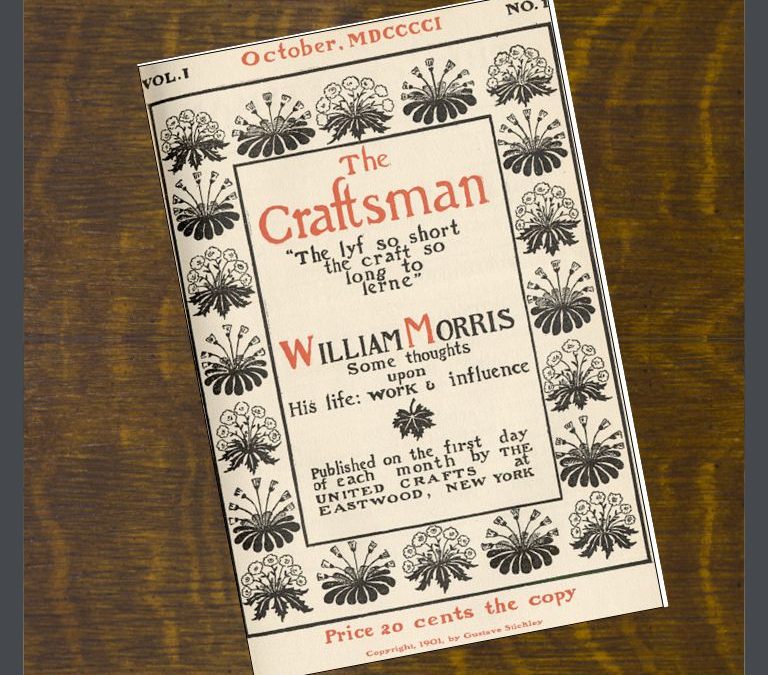
 “An illustrated monthly magazine in the interest of better art, better work and a better more reasonable way of living.”
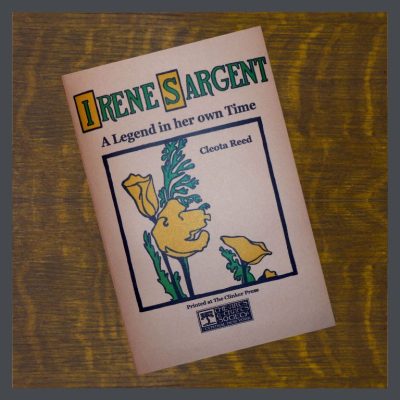 With that, let’s pause to consider the fact that in the first eight volumes of The Craftsman, from October 1901 to September 1905, Irene Sargent, an American art historian, made eighty-four contributions, & nearly all of its first three issues were written primarily by her. An academic, her aesthetic is succinctly expressed by a quote she published of Thomas Carlyle: “ornament is the first spiritual need of barbarous man.” This book, a chronology of Sargents’ life, by Cleota Reed, was hand-printed by Andre Chavez of The Clinker Press.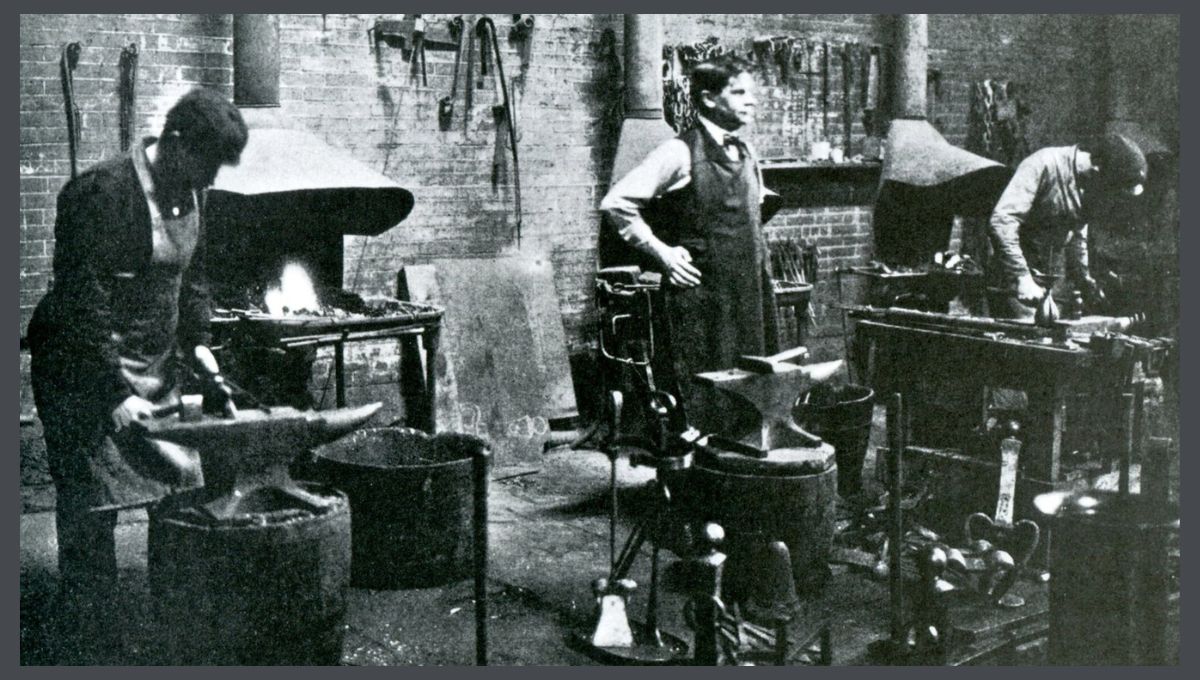

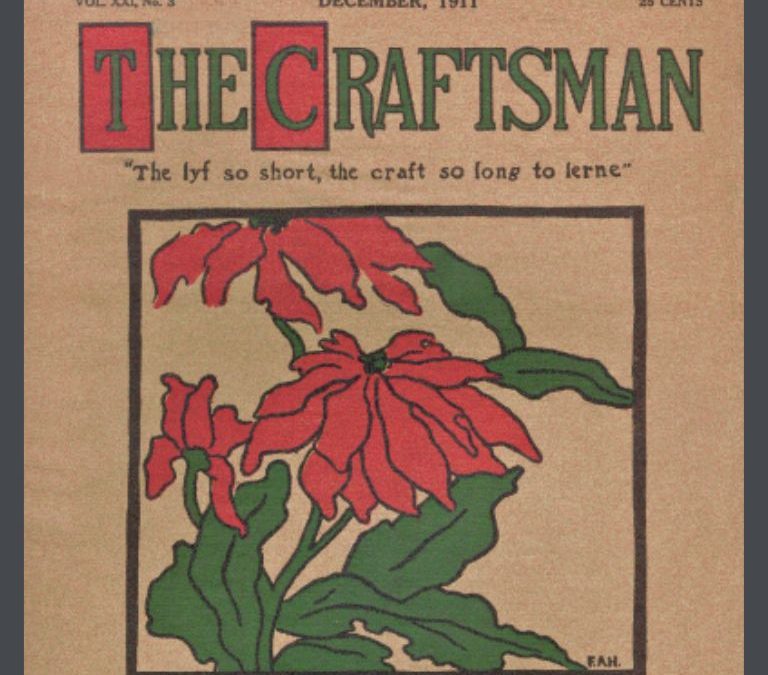
 CHRISTMAS DECORATIONS FROM WINTER’S GARDEN
 The reason among the Druids for bringing in bits of evergreen from the woods and adorning the house is a most charming and lovable one—”The houses were decked with evergreens in December that the sylvan spirits might repair to them and remain unnipped with frost and cold winds until a milder season had renewed the foliage of their darling abodes.” How gracious a way of luring the shy, sweet wild-woods spirits into the homes of men!
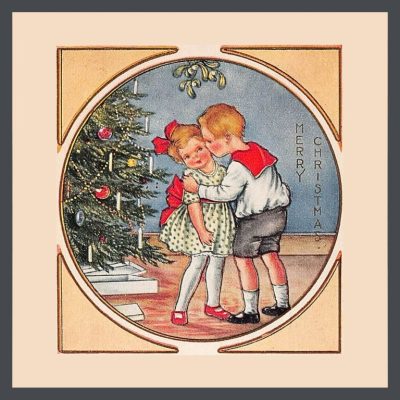 But whatever the origin of decking our homes with holly, mistletoe or with branches of any green plant hardy enough to carry with it a hint of immortality by remaining fresh and green throughout the apparent death of the world during the winter—the custom is now well established, and who would willingly let it slip into oblivion! It would seem strange indeed not to welcome this child’s festival,—the holiest festival of the year’s calendar,—with fragrant boughs from the forest set at our doorways and windows and on our altars. It is a fitting and beautiful way to symbolize our love and worship of the One who made immortality credible.
 Of those bearing bright berries that we can gather from the woods or fields to adorn our homes at this Christmas season, perhaps the general favorite in the East is the holly—in the West it is the toyon. These two glossy leaved bushes of the scarlet berries are too well known to need words in their favor. The mistletoe of the South and of the West should be mentioned in the same breath with these favorites, for they are closely associated in our minds. The “Lord of Misrule” and the “Abbot of Unreason” [both terms apply to a peasant or low level church official appointed to be in charge of Christmas revelries, which often included drunkenness and wild partying] have claimed these white Christmas berries from the time of their first hilarious coronation day when fate was precipitated with surety upon the head of the maiden of their merry courts who was caught under the fruiting branch of their wand—the mistletoe bough!
 Among the evergreens whose beautiful leaves are polished to glossiest perfection by Jack Frost, are the magnolias, rhododendrons, mountain laurel, bay laurel, madrone. The pepper tree of the Southwest drips with red berries as well as sparkles with shining leaves. The checkerberry also combines red berries and polished leaves, though it is a tiny humble little plant compared to the showy pepper tree. Galax leaves are coming into favor, and deservedly so, for they are of the richest, glossiest dark green and bronze, and their heart-shaped surfaces are beautifully veined, a fine example of natural engraving.
 Besides all these green things that are to be had as reward of a walk in field or forest, are the evergreen trees of all kinds, the firs, spruces, arborvitaes, pines, hemlocks, whose balsamic fragrance add so much to Christmas cheer. The Christmas rose should be better known—should be made to bloom in our gardens as well as in Nature’s garden.

 Life changes can interrupt the most heart-felt, best laid plans. A marriage, a divorce, a new baby, a job transfer, a lay-off, a family member in need of care, any one of these things can profoundly affect your circumstances.
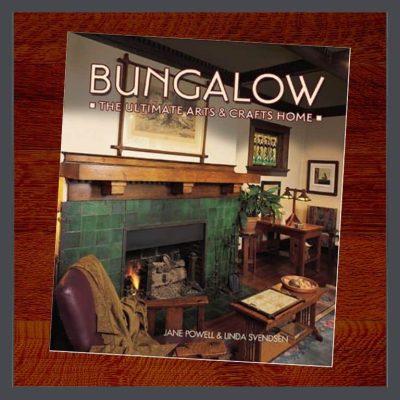 1. Research the history of your house & neighborhood. Dig deep. In our disconnected world, people are searching for connections. You want to make the builders & former owners of your home real & lovable. Read my article on
 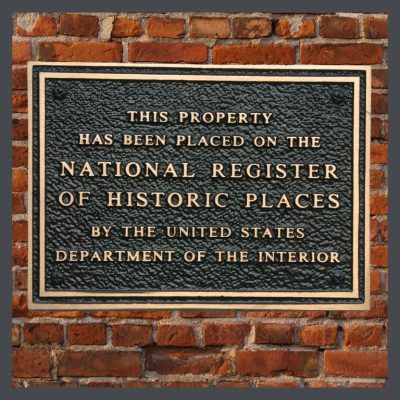 6. Here’s a biggy. Most municipalities have historically designated houses. With all the research that you have done, you probably have sufficient information to apply for & be granted such a designation, at the local, state or even national level. This designation can go far in protecting your house, at least its exterior. There is nothing cannot be challenged in a court of law, but generally this designation will chase people away who want to seriously maul your house.
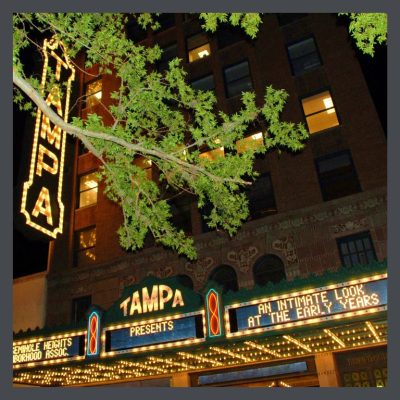 7. Connect with your neighborhood group. Older neighborhoods tend to have strong neighborhood associations. You will make good friends & learn much about the history of your area.
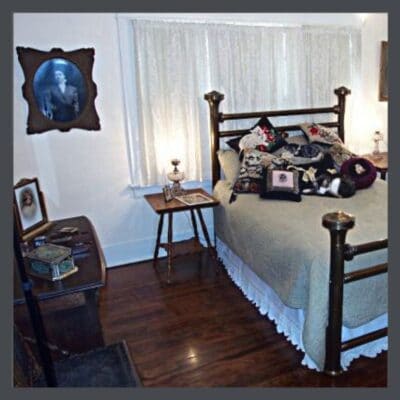 1. De-clutter. Yard sale or donate anything that you do not need. Just get rid of it! This includes furniture.
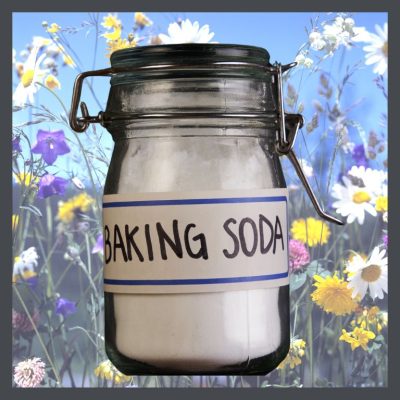 7. Wash your sheets & mattress covers & your pillows if they are washable. Again, skip the scented products. I wash with baking soda, letting stinkier loads soak. I do not use fabric softener. It is made with cheap, petroleum-based ingredients & fragrance &
  1. Understand the market for your price point in your area. Right now, inventory is very low so although interest rates are high, the shortage of houses is acute, raising the value of those available.
 1. 11” X 17” paper costs about a nickel a sheet. Doing a 4 page flier in a foldover instead of the standard 2 back & front, sets you apart from the crowd & allows you to really tell your bungalow’s story. Here are some things you could include:
 1. Ensure your Realtor is going to promote your bungalow on every line that she has. My open was so full of people that we could hardly make it out the door. People were taking turns to see our beautiful bathroom. It was a total party! And it generated 5 offers.