You are wondering about what tile is appropriate for your bungalow. So, what is bungalow tile & what are the resources available to obtain it?
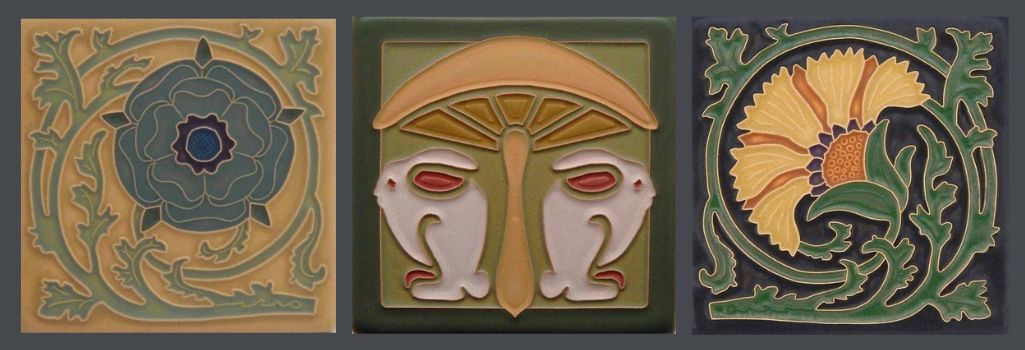
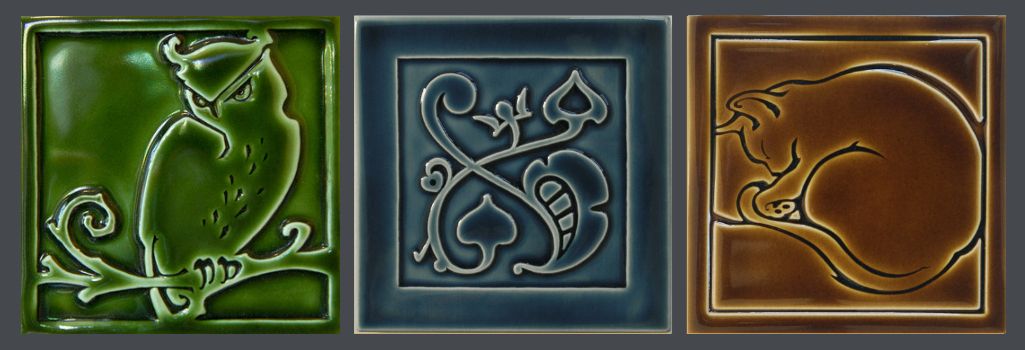
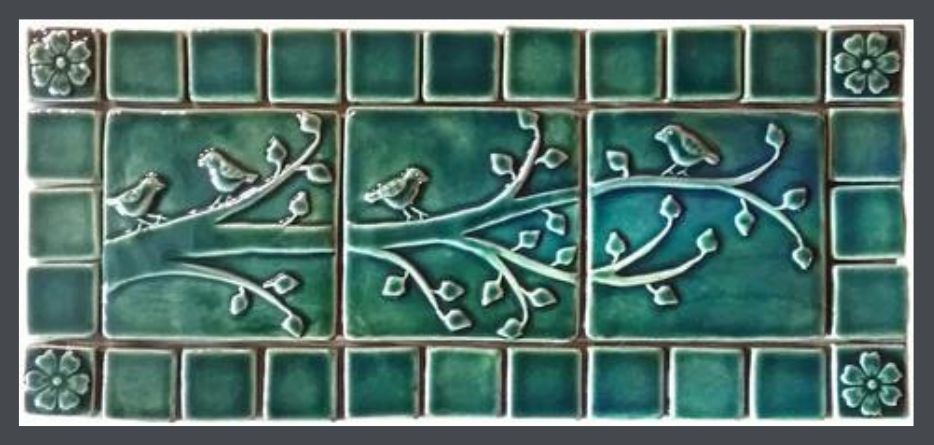
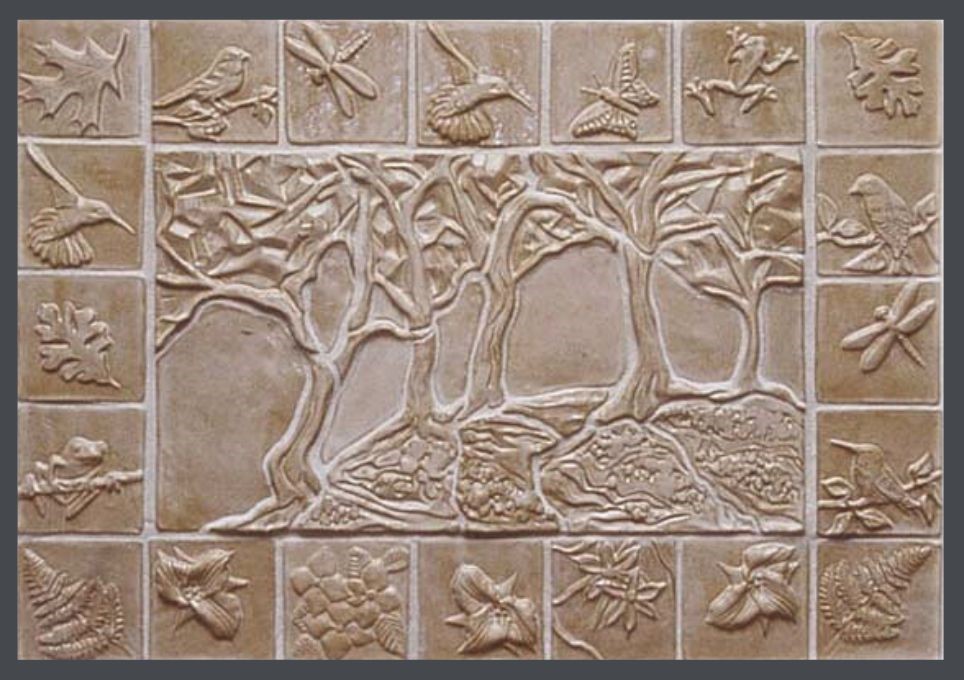
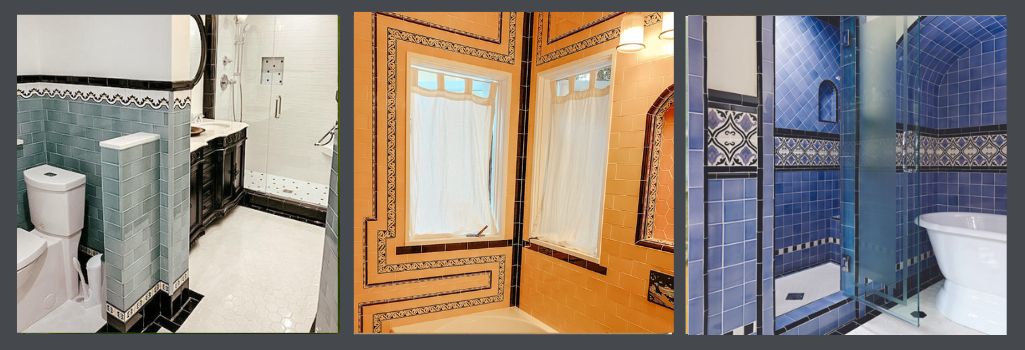
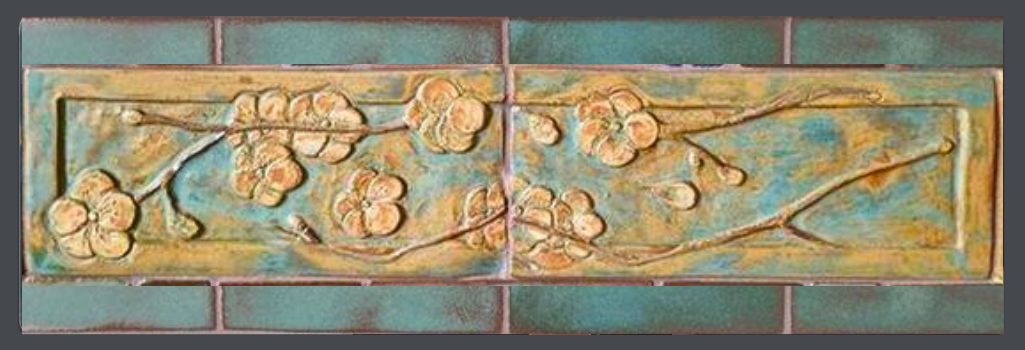
The tile most appropriate & at home in a bungalow, is of the Arts & Crafts Movement, unsurpassed in beauty & variety. While the masters of the period, such as Batchelder, are long gone, there is a wonderful group of modern day artisans, working in the Arts & Crafts aesthetic. They produce tiles that could enhance your bungalow, either installed on your fireplace, in your kitchen or bath, or mounted in a tiger oak frame in your study. I have collected these resources & hope that I have included enough images for you to understand what each company offers. It’s a very extensive list, but I feel that each maker, from the well-known to the more obscure, is worth viewing.
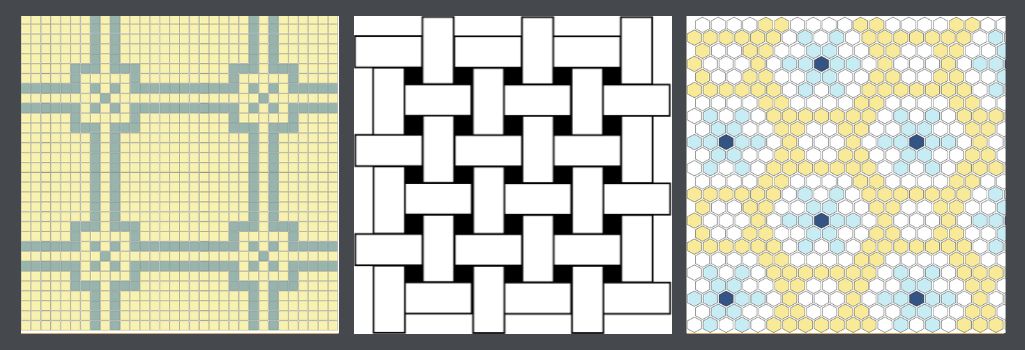
ART uses modern manufacturing technology to exactly duplicate the sizes & colors of old ceramic tile, manufacturing to your design specifications, or suggesting colors and patterns to correspond with your era of restoration.
Their unglazed porcelain products have:
• flat tops (no cushioned edges)
• square edge (no rounded corners)
• impervious surfaces
• the style of the early 1900’s
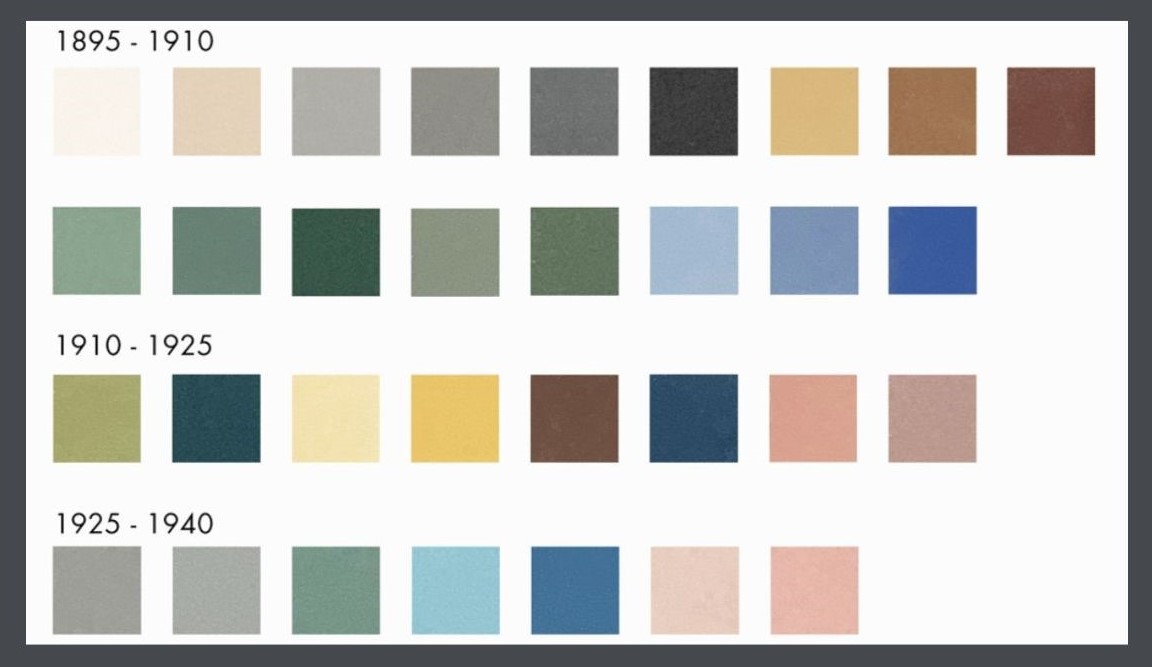
ART’s Historical Color Palette is very informative about the tile colors that were used during different periods in design.
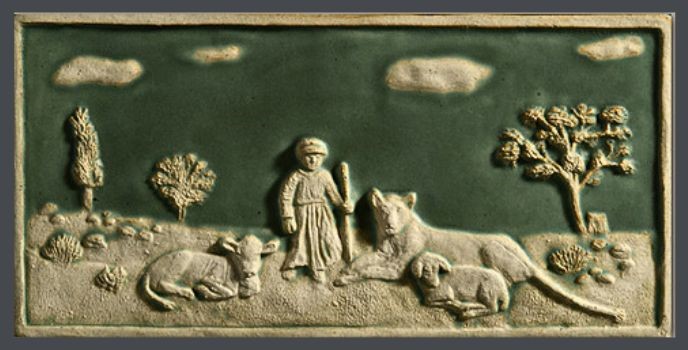
5/8” thick, Stoneware clay, hand glazed in lead free, food safe glazes. Suitable for all indoor applications. Each tile has a notch on the back for hanging.
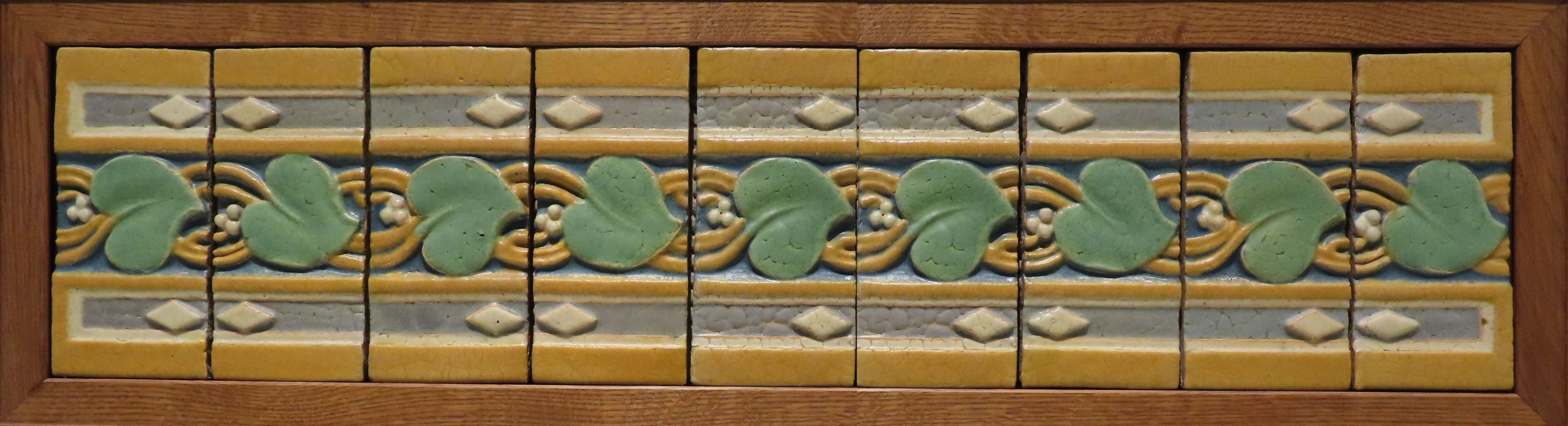
They feature made to order art, border & field tiles for fireplaces, backsplashes in the Arts & Crafts, Art Nouveau & Prairie styles, in your choice of either a gloss or matte finish.
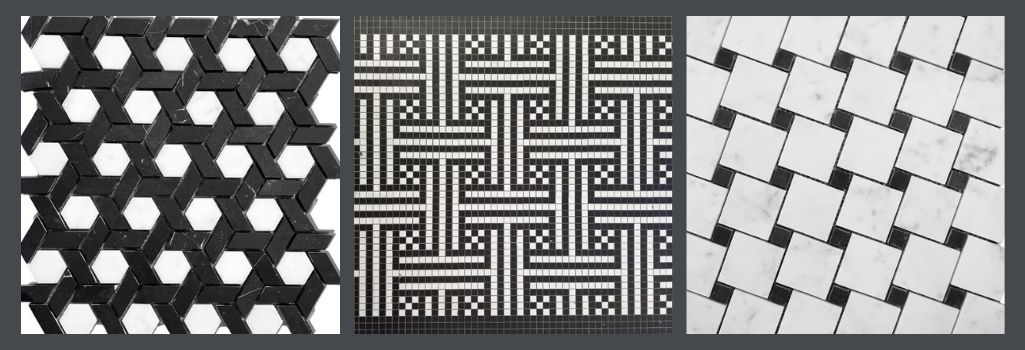
Specializing in classic, traditional & authentic ceramic tile & stone, they include Design Guides on their website to assist you in choosing appropriate tile. Their Subway Ceramics collection, available in The Bungalow Series, offers satin glazes in a variety of historic colors, as well as many complementary accessories. They also carry mosaic tiles & field & border patterns.
Custom Handmade Architectural Ceramics & Tile
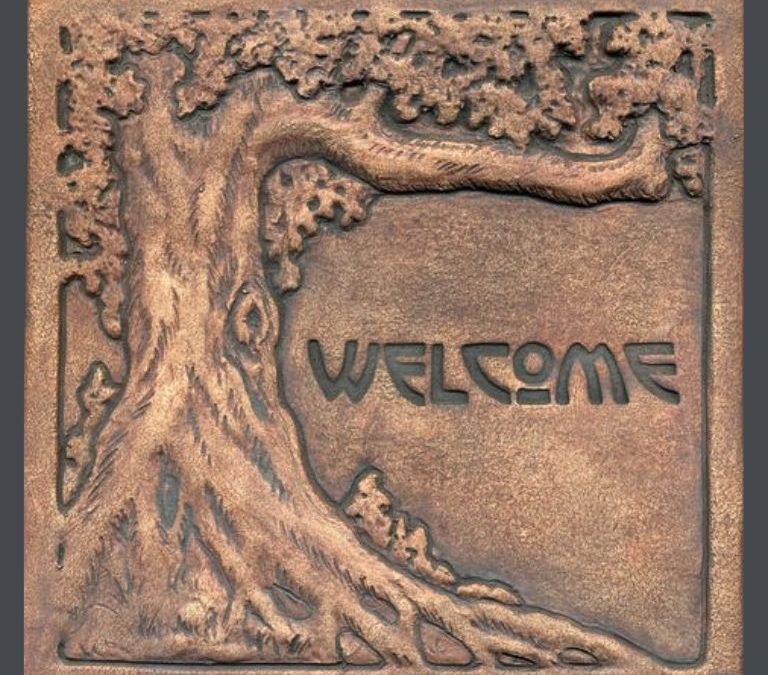
Handmade relief tiles available in many different, lovely colors & two different sizes. They also offer matching field tile & borders in all glazes.
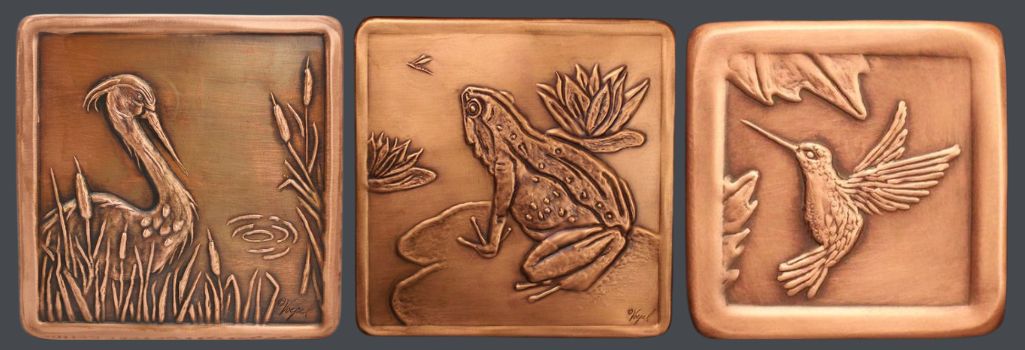
Monte, the creator of these tiles, had worked as a potter for a number of years, when he was drawn to durability, warmth & beauty of copper, a material used by many other Arts & Crafts artists.
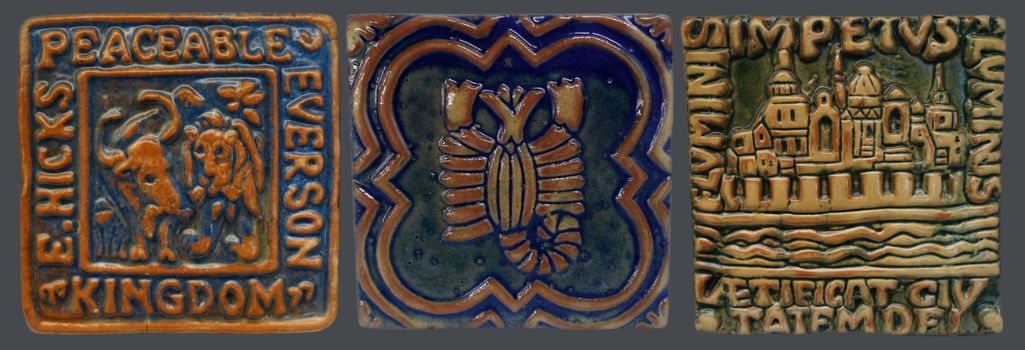
This company is actually a history museum, owned by Bucks County in Pennsylvania, & operated by TileWorks, a non-profit organization. The tiles are reissues of original designs & are still handmade in a manner similar to those created by Henry Chapman Mercer, the founder, a major contributor to the American Arts & Crafts Movement. They offer workshops & an apprenticeship program to teach the art of handcrafting ceramic tiles & mosaics.
Motawi makes handcrafted ceramic art tiles as well as designing larger-scale tile installations, including fireplace facades, bathrooms & kitchen walls.
Exquisite tiles, many inspired by Batchelder, are made to order by this mother-daughter duo, specifically for your project. They offer brilliant design services to make your installation perfect.
“We believe in the alchemy of earth and fire.”
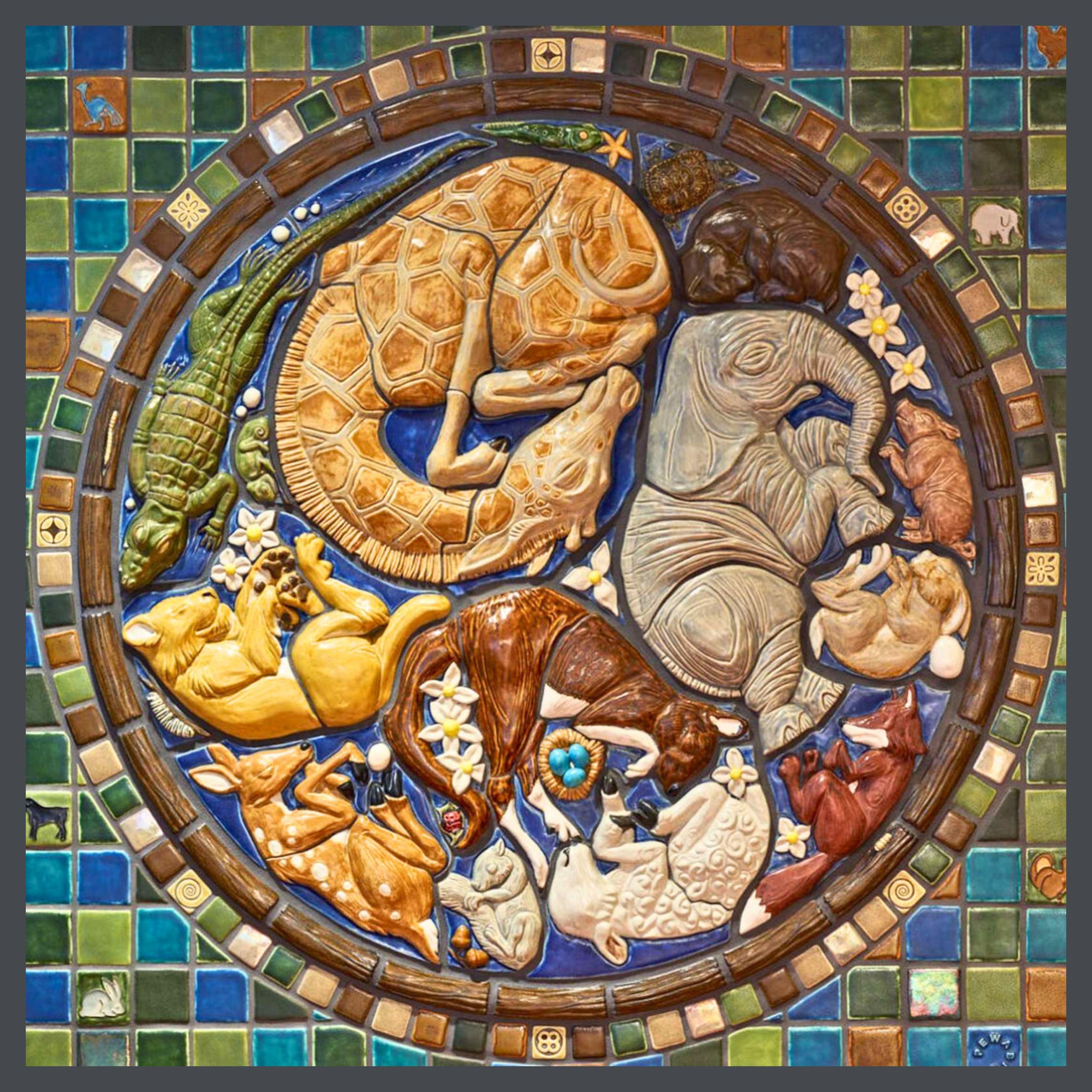
Founded in 1903, Pewabic is one of the oldest continually operating potteries in the country. Shown above is a beautiful installation for a birthing center.
High quality, high fire decorative tiles, most of which are are hand pressed in molds that are made from their original sculpted works. Inspired by gardening, wildflowers & nature.
To see even more wonderful tiles, visit my Pinterest page!
STAY IN THE BUNGALOW KNOW!!!
Sign up for our newsletter & receive our FREE E-book, 7 VITAL Things to Do Before You Hire a Contractor.
THE CRAFTSMAN Volume One
OCTOBER 1901—MARCH 1902
“Though the name of William Morris has long since become a household word throughout America, yet the personality of the man, as well as his great part in the world’s work, is definitely known but to the few. His was a versatile genius…”
The father of the Arts & Crafts Movement, Morris was an undisputed genius whose mastery of textile & furniture design, poetry, illustration & writing changed the world of art & architecture in his native England & here in America.
These videos of William Morris are the work of scholars due to the fact that his influence on art & architecture, & on the cultures of England & America has been profound & lasting. His life, his marriage, his homes have been carefully examined because he was a man of such depth, talent & vitality that he changed the way that the world looked at design, labor & humanity.
Please watch these videos on a larger screen!
WATCH VIDEOS OF THE LIFE & WORK OF WILLIAM MORRIS
The inspiration behind the designs of William Morris (25:14)
Forest School
A fascinating look at Morris’ life.
The Life and Times of William Morris: Textile Arts Council of the Fine Arts Museums of San Francisco (1:13:18)
TAC Social Media
An in-depth look at Morris & his art.
The Eternal Craftsman: William Morris and 21st Century Craft
V&A Museum
An exploration of Morris’ approach to design.
Virtual Member Lecture: “Morris and Company—The Business of Beauty”
The Art Institute of Chicago (45:09)
Textiles & wallpapers exhibited at the museum.
Laurence Llewelyn-Bowen speaks at the Brilliance of William Morris
Forest School
The story told by Morris’ designs.
To learn more about the work of William Morris’ daughter & the other women of the Movement, visit here.
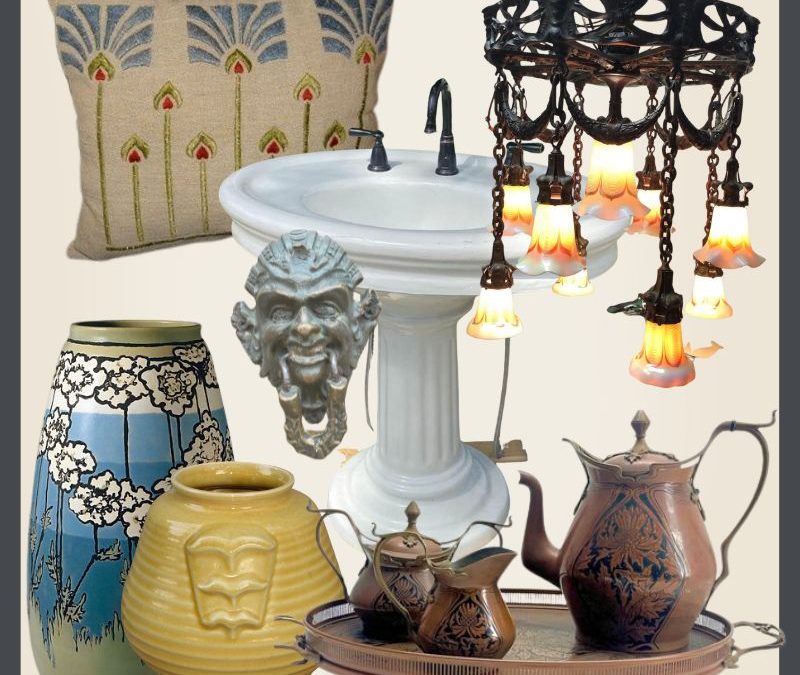
This article points you to bungalow resources, designed to enhance the wonderful features of your bungalow. Shopping for & owning these beautiful pieces is one of the most enjoyable things about stewarding your home.
The hardware, lighting & decorative items of the Arts & Crafts Movement are cheerful & brilliantly beautiful. Period kitchens & baths will pay homage to the past owners & are just good design sense. In your decorating, leaping about the decades is visually disturbing (Jane Powell called it “cognitive dissonance.”) & can confuse the flow of the interior. But, the goods you need to create a period atmosphere, are not always easy to find.
I am still building my resources list. I considered whether I wanted to wait until it is complete to post it, but you may be desperately looking now, so take a look at what’s here & keep coming back, It is growing daily. (Or at least weekly.)
I’ll also mention that many of the items you might need can be found on the resale market in your local area. Facebook Marketplace is growing daily & Craigslist seems to be hanging in there too. Of course the odd piece can still be discovered at a yard or estate sale but, you have to have more patience than I do & get up with the worms.
The caveat here is that I have no clue as to who any of the folks are that are selling on any of these group pages. You must perform your own due diligence regarding every aspect of the offered item- value, condition, authenticity, etc.
MY CURATED RESOURCE LISTS
ARCHITECTURAL SALVAGE
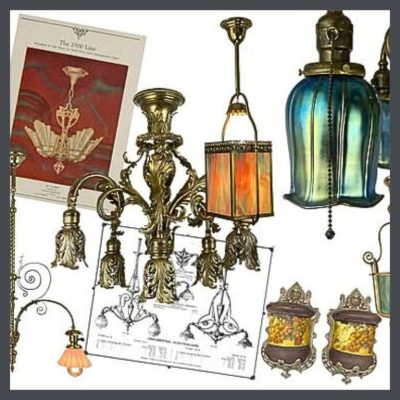
From hardware to plumbing fixtures to stained glass & furniture, salvage dealers are finding it all for you. My list is about ready to grow so check back. I have gotten some great recommendations from the followers but I need to add them & I type sl-o-o-ow.
HARDWARE
Functional & beautiful, another signature craft of the Movement.
RESTORATION CLASSES
Where you can learn new skills for DIY, or gain knowledge to help you in overseeing the work done by tradesfolk.
TILE
Molded from earth, tile is both strong & versatile. It is one of the core design elements of any home.
WINDOW COVERINGS
A necessary element, window coverings compliment your other design elements, giving your privacy & protection from the sun & the cold.
MORE RESOURCES ONLINE
Additionally, there are many pages & groups on Facebook that are dedicated to antique items of the period as well as goods by modern A&C masters. As a bonus, they offer wonderful information on the period. Below is a list of these groups who allow buying & selling. Some pages do not. They exist only for giving & receiving information, & for fellowship. It’s not a bad idea to join these too, but that’s not today’s topic.These are digital communities of Arts & Crafts Revival Artisans & Revival aficionados, sharing work of current craftsman, or promoting various events such as fairs, sales, & websites. In other words, you can buy & sell on these pages.
In the Arts & Crafts Style
This group is for the sharing and enjoyment of the Arts & Crafts era of the late 1890s to the 1920s, as well as its contemporary counterparts. Selling/trading items, sharing real estate ads for Arts & Crafts style homes are very much acceptable in this group.
Arts and Crafts Furnishings of Mission Oak, Stickley, and Limbert
The second group is geared toward beginners & intermediate collectors of the Arts & Crafts Movement & the items we live with in our homes. Focus is primarily furniture of the period, along with decorative objects, both period & reproductions of quality.
Some of the individual resource pages below, list Facebook groups specializing in those specific iitems.
Meanwhile, keep reading my blog & loving your bungalow. There is more to come! I am forever searching for more vendors of bungalow enhancing items so-
STAY IN THE BUNGALOW KNOW!!!
Sign up for our newsletter & receive our FREE E-book, 7 VITAL Things to Do Before You Hire a Contractor.
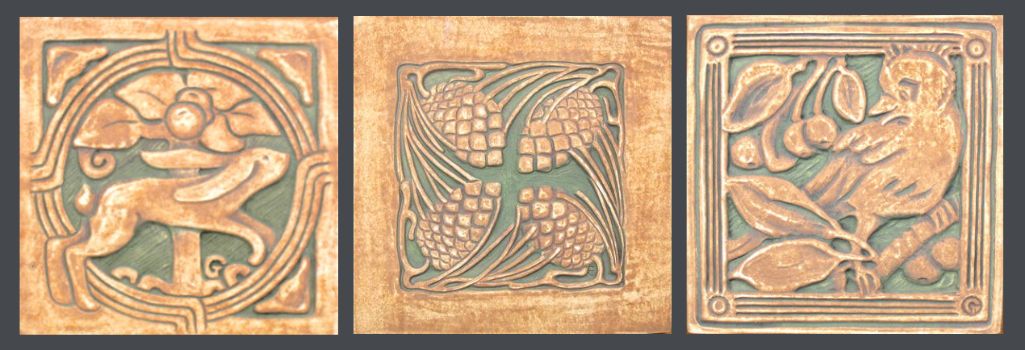
For me, Ernest Batchelder, tilemaker (1875-1957) stands with the Greene’s as an icon of the Southern California Arts & Crafts Movement. Like the Gamble House, Batchelder’s home overlooked the Arroyo Seco & like the brothers, he took inspiration from the beauty of this area with its often dry, sometimes gushing river, the tumbled rocks & the magnificent California oaks that lined the bed.
Robert Winter, architectural historian, lived in his house from 1971 until his death in 2019 & was an expert of all things Batchelder, writing the definitive Batchelder history, Batchelder Tilemaker. Winter contributed hugely to our understanding of the Movement in Southern California. We see his delightful self here in the first video.
I’m going to allow the videos to tell his story.
THE TILE OF ERNEST BATCHELDER
House of the Green Rabbit: The Ernest A. Batchelder Bungalow (16:31)
PasadenaHistory
Robert W. Winter Batchelder architectural historian & tile expert talks about the life & art of Batchelder. We get a nice tour of the home, in which Winter lived after his death & we hear from Alan Batchelder, the grandson of Batchelder.
History At Home: Ernest A. Batchelder
Pasadena Media (2:22)
More about Batchelder & his work & some views of more of his wonderful tiles.
Batchelder Fireplaces – The Cat’s Meow (5:20)
KGEM-TV
See some beautiful surrounds adorned with Batchelder’s tiles.
Wondering if the tiles in your house might have been made by Batchelder? The Pasadena Museum of History is compiling a database of tiles & is offering to identify yours. Click here for more information on how to access this great service.
To see more examples of his art, visit my Pinterest page here.
Handmade tiles with Pasadena Craftsman Tile
(5:33)
Pasadena Craftsman Tile
Tile artist Cha-Rie Tang creates custom handmade relief tiles in the Arts & Crafts style & Batchelder revival tiles. She’s who I want to be when I grow up.
Visit my tile resources page to purchase tile for your bungalow & to see more wonderful tile made by other, very talented craftsfolk all over the country.
STAY IN THE BUNGALOW KNOW!!!
Sign up for our newsletter & receive our FREE E-book, 7 VITAL Things to Do Before You Hire a Contractor.
Few things are more at home in a bungalow than American art pottery. Its bright colors & luster bring cheer & light to a dark interior & add details that complement the simple lines of the more rustic Arts & Crafts furniture & Craftsman architectural details.
Anyone can collect art pottery. Mine was representative of the finest from the period, chipped & mended into affordability. There are plenty of imperfect pieces on the market & artfully arranged, you can emulate the most prestigious collection of any museum. (I won’t tell.)
Pottery can serve as an inspiration piece when you are starting from ground zero in decorating your home. Using the colors, the images, the shape, you can use them as a basis for choosing your furniture & your textiles.
LEARN HOW POTTERY CAN BE BEAUTIFUL IN YOUR BUNGALOW
American Art Pottery Secrets – Paul J. Katrich – 1 of 6(9:08)
Paul Katrich
Paul, himself a master potter, is passionate about historic pottery. This is the first of 6 videos in which he explains the origin & inspiration of Arts & Crafts pottery. He tells us about the aesthetic & technological developments that culminated in American A&C, then shows & tells us about the icons of the period.
I am not going to list every video in the full series. The parts are best viewed in order & when the first video is over, the second & those after will magically appear. You will experience some lovely examples of the American Movement!
THE IMPORTANCE OF WOMEN IN AMERICAN ART POTTERY
Women artists have been overlooked for centuries. By the end of the 19th Century, we began coming into our own. In addition to demanding to work, we were also clamoring for a place in the world. Recognition would come much later, but what we wanted was the opportunity to use our wits & talents to contribute to the human cause. For many women, gaining artistic skills meant that they had greater earning power & could feed their families.These videos tell of how the crafts, especially pottery allowed us to do this.
Overbeck Sisters’ Arts and Craft Pottery in Indiana – Fulfilling their creative potential (9:15)
Hoosier Woodcraft
Four sisters who believed that “borrowed art is bad art” & took inspiration from their own backyard.
This video is wonderful but plays so fast that the captions are difficult to read. I think they must have thought that it was too long & sped it up. I played it at 50% & enjoyed it very much!
Women, Art, and Social Change: The Newcomb Pottery Enterprise (1:32)
Gardiner Museum
An overview of the Smithsonian exhibition of ceramics. metalwork, textiles & images of the women at work.
Roger Ogden on Newcomb Pottery (2:31)
Craft in America
Roger Ogden, collector explains the femininity of New Orleans, the home of H. Sophie Newcomb Memorial College (Tulane University’s former women’s college.)
Earth into Art — The Flowering of American Art Pottery (2:00)
Morse Museum
Lead by woman, America’s first success on the World’s art stage.
STAY IN THE BUNGALOW KNOW!!!
Sign up for our newsletter & receive our FREE E-book, 7 VITAL Things to Do Before You Hire a Contractor.
This article will cover residential illumination, with emphasis on bungalow lighting design basics. We’re going to look at types of lighting, as they could be applied to your unique home.
Many years ago, I did a survey of homeowners, seeking to understand what they considered to be their most important goals when decorating their homes. Soon after, a similar survey was conducted by the National Wood Flooring Association. Combining the results of these two surveys was wonderfully illuminating. (Pun intended.)
My survey results showed that people placed great value on beauty- highly prized as contributing to the quality of life, in the Arts & Crafts philosophy.
The second valued attribute was warmth, a visual manifestation of the human connection. We style our homes to be welcoming, to be safe havens of comfort & regeneration for our families & our friends. We want our homes to express us, to tell our individual stories. To help us connect.
The NWFA’s questioning uncovered the desire for design that is beautiful &, “evokes an emotional response.” Once again, the human factor, the wish to communicate, the desire to be heard & understood by others.
The warmth & beauty are built-in to the basic design our bungalows. No one (at least no one reading this article!) can deny their own, emotional response to the beautiful features of a historic bungalow.
So, how can we enhance the warmth, the emotion, the beauty in our homes? How do we make our living spaces express our individual voices more clearly & eloquently? How can our homes contribute more profoundly, more richly, to the lives of our beloved family members & our dear friends, in the simple design choices that we make?
Well, here’s how you can put a little more light in their lives!
AMBIENT LIGHTING IN YOUR BUNGALOW
The first to consider is general, or ambient (defined as existing or present on all sides: encompassing) lighting. This is the type that provides a general, uniform illumination for the entire area, allowing you to be oriented to the space & to move about safely. During the day, this is usually provided by windows.
Our bungalows tend to have deep porches & overhangs. We also often have large, mature trees which block the sun, so the illumination provided by our windows is not always bright. When many of our homes were built, we were not accustomed to the high wattage of today’s lighting & such illumination was sufficient. In fact, our houses were planned to be at their most attractive under the softer, more subtle glow of the lighting of the times. Window coverings typical to the period allowed this natural light in, providing layers of blockage for privacy & darkness.
Our fireplaces contribute to the ambient light. At one time, they would have provided a main source of visibility & warmth. The family would have crowded ’round after the sun set for warmth, comradery & entertainment, as well as illumination. (I cannot but compare a similar scene today- the family sitting around the big screen TV, in the cold glow of its blue light, each person mute & staring, some looking at their phones.)
The study of my Eagle Rock home, the Hare House had a small fireplace in addition to the main fireplace pictured above. The first resident, Alfred was both a minister, leading a congregation & an attorney with a thriving law practice in downtown Los Angeles. Though he had sisters who lived nearby, & both Alfred & Grace were very active in community affairs, they were childless & I imagine that, at times, she may have gotten lonely. I can easily picture Reverend Hare working at his desk there in the evening, perhaps with the added help of a gas lantern, to keep his dear Grace, company. Perhaps she knitted for one of her charities or aid groups?
TASK LIGHTING
Reading by the fire was a common pastime which we would find rather uncomfortable now. After our homes were wired for electricity, we eagerly employed lamps to read & write, to cook & wash dishes, to shave, to accomplish the many tasks inherent in daily living. I’m in hearty agreement! Should I need to read a set of tiny directions, or figure out what my cat has in his mouth, I want light & plenty of it.
Task lighting has different functions in various rooms. Probably most people don’t read in the living room these days, & for many, reading means looking at a lit screen, but some folks actually read print books & it’s handy to have light directed at it. Too bad that there’s no sheet music in this piano image because it’s such a perfect example of task lighting.
In the kitchen, task lighting is crucial for safety, hygiene & perfect caramelization. And for identifying which children are yours.
Let me be perfectly clear here about the use of can or recessed lights. Nope, no way, no how! IN BUNGALOW DETAILS: INTERIOR, Jane says,” DO NOT ALLOW RECESSED CAN LIGHTING INTO YOUR BUNGALOW!”
She obliviously felt that you needed to defend yourself from this type of lighting at all costs. Jane goes on to say, “There is nothing, NOTHING that screams ‘late twentieth century’ more than a recessed can light- I don’t care how many lighting designers tell you they are ‘unobtrusive…’
“There was no track lighting either, nor were there fancy Italian-design halogen lights suspended on wires.”
This is how we define the room. Against a dark background of wood, accent lighting creates atmosphere, forming multiple layers of depth. It draws the eye from one point of illumination to the next, create sculptural vignettes, enhancing the aesthetic & intimacy of the room.
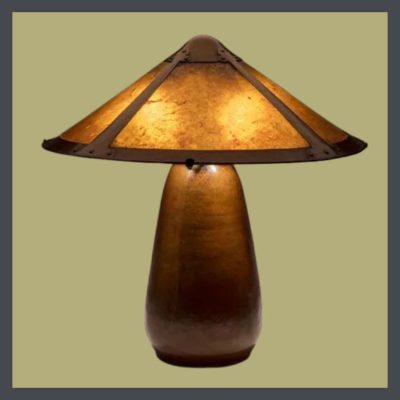
Here we see a beautifully illuminated room. The lighting is layered- there is ambient lighting coming from the windows, complete with a cozy kitty, & table lamps which serve as task & accent lighting. You could easily read in the cushiony chairs beside them & they highlight the textile to the front, & the teddy on the window seat. Notice the signature acorn pulls of RAGSDALE, Mission Style Oak and Mica Lamps and Lighting, a modern master about whom you can read in Part 7.
The beauty of layering that it imparts a warm glow throughout the room. There are no abrupt changes that force your eye to readjust to different areas, yet, there is enough variety to keep it moving & interested.
This article is just the beginning! To become a master of bungalow lighting, keep reading!





 THE CRAFTSMAN Volume One
 This article points you to bungalow resources, designed to enhance the wonderful features of your bungalow. Shopping for & owning these beautiful pieces is one of the most enjoyable things about stewarding your home.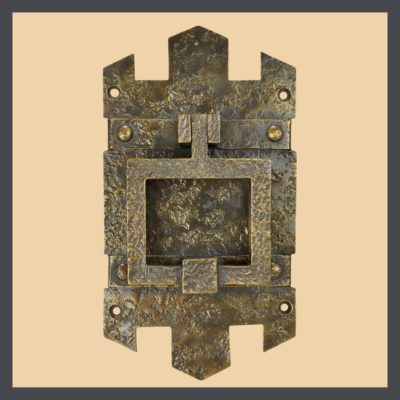
 Additionally, there are many pages & groups on Facebook that are dedicated to antique items of the period as well as goods by modern A&C masters. As a bonus, they offer wonderful information on the period. Below is a list of these groups who allow buying & selling. Some pages do not. They exist only for giving & receiving information, & for fellowship. It’s not a bad idea to join these too, but that’s not today’s topic.These are digital communities of Arts & Crafts Revival Artisans & Revival aficionados, sharing work of current craftsman, or promoting various events such as fairs, sales, & websites. In other words, you can buy & sell on these pages.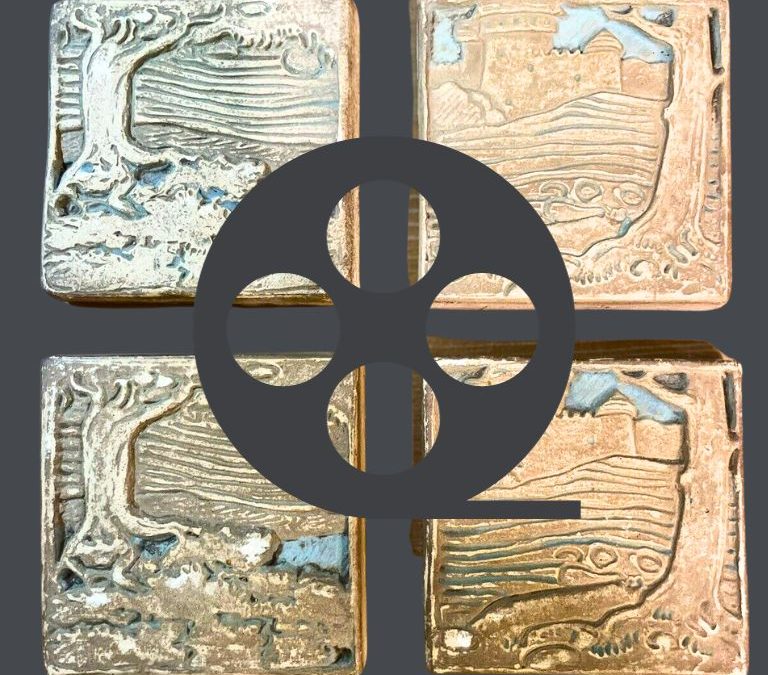
 For me, Ernest Batchelder, tilemaker (1875-1957) stands with the Greene’s as an icon of the Southern California Arts & Crafts Movement. Like the Gamble House, Batchelder’s home overlooked the Arroyo Seco & like the brothers, he took inspiration from the beauty of this area with its often dry, sometimes gushing river, the tumbled rocks & the magnificent California oaks that lined the bed.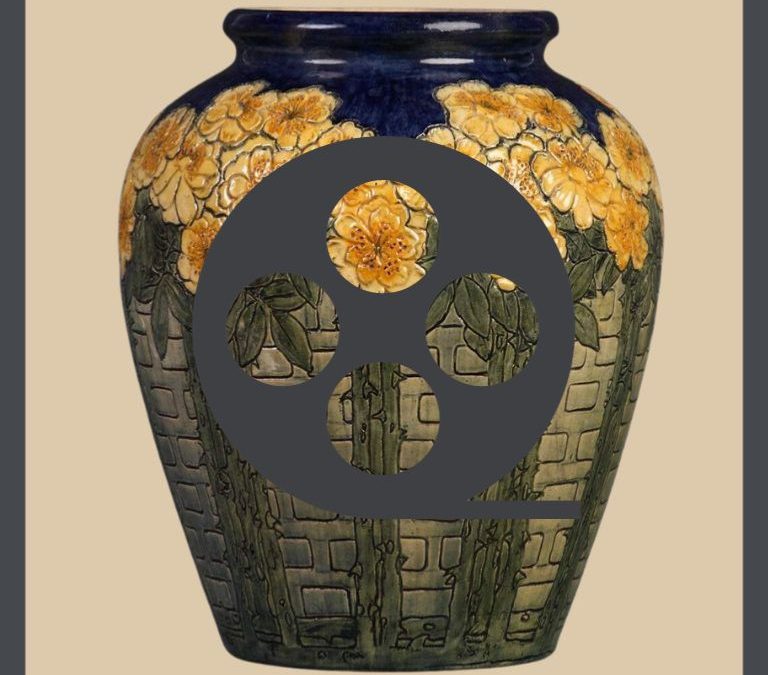
 Few things are more at home in a bungalow than American art pottery. Its bright colors & luster bring cheer & light to a dark interior & add details that complement the simple lines of the more rustic Arts & Crafts furniture & Craftsman architectural details.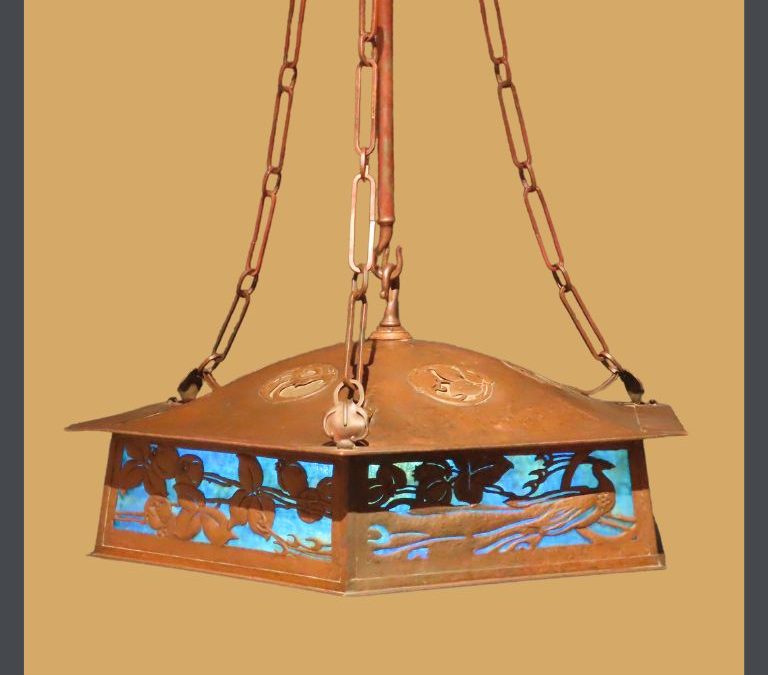
 This article will cover residential illumination, with emphasis on bungalow lighting design basics. We’re going to look at types of lighting, as they could be applied to your unique home.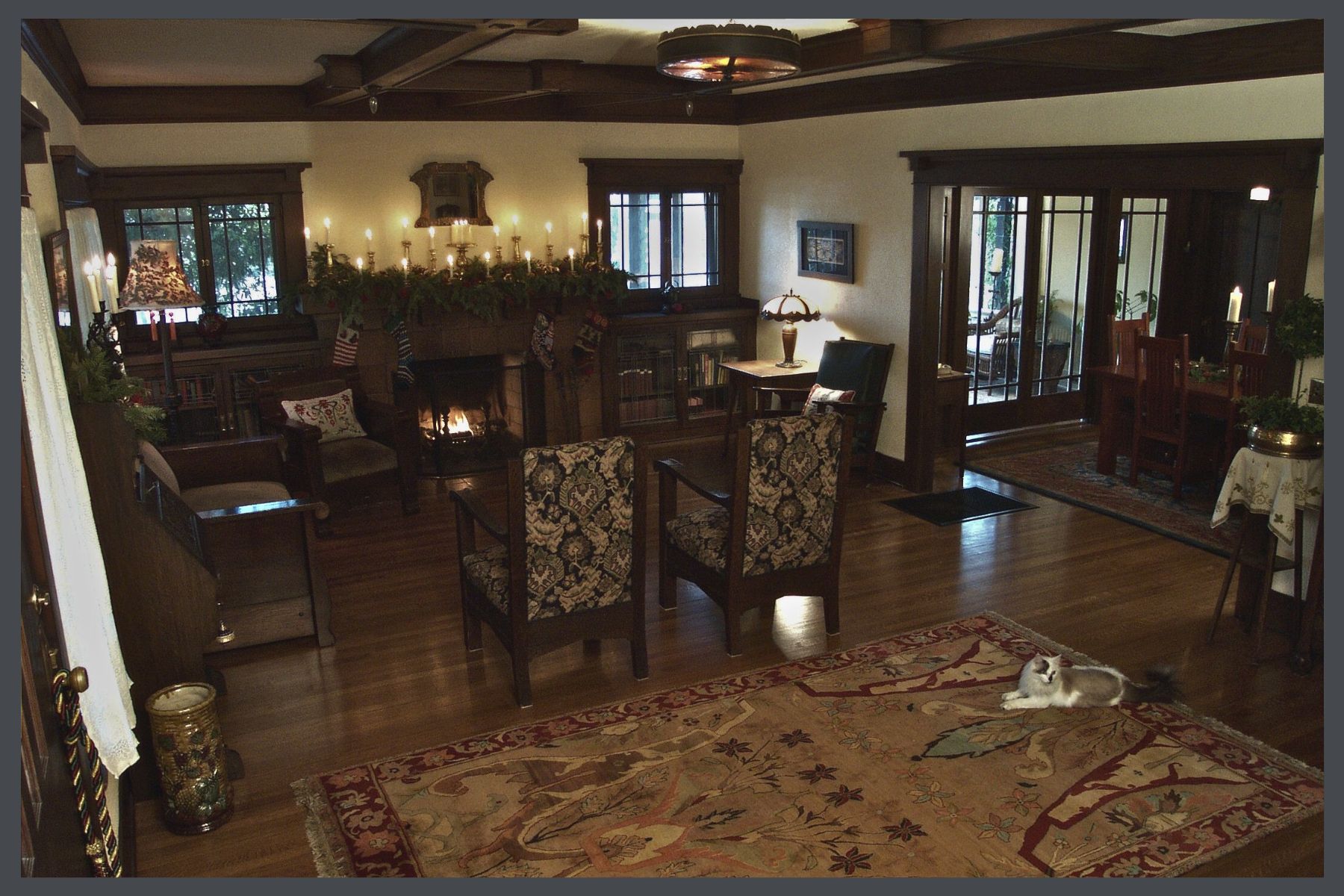
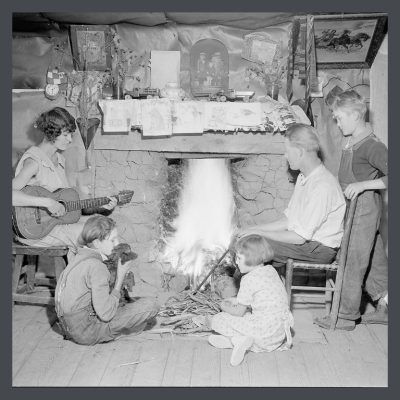 Our fireplaces contribute to the ambient light. At one time, they would have provided a main source of visibility & warmth. The family would have crowded ’round after the sun set for warmth, comradery & entertainment, as well as illumination. (I cannot but compare a similar scene today- the family sitting around the big screen TV, in the cold glow of its blue light, each person mute & staring, some looking at their phones.)
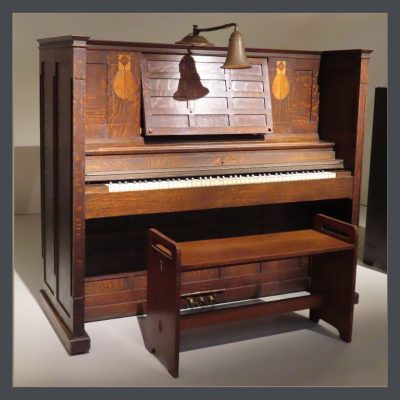 Reading by the fire was a common pastime which we would find rather uncomfortable now. After our homes were wired for electricity, we eagerly employed lamps to read & write, to cook & wash dishes, to shave, to accomplish the many tasks inherent in daily living. I’m in hearty agreement! Should I need to read a set of tiny directions, or figure out what my cat has in his mouth, I want light & plenty of it.
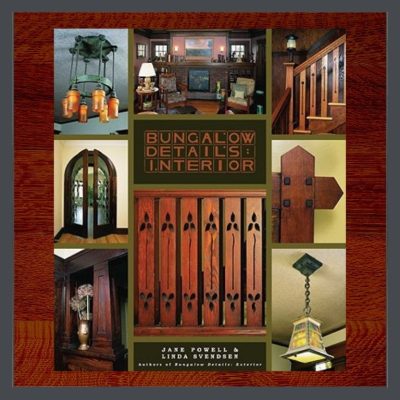 Let me be perfectly clear here about the use of can or recessed lights. Nope, no way, no how! IN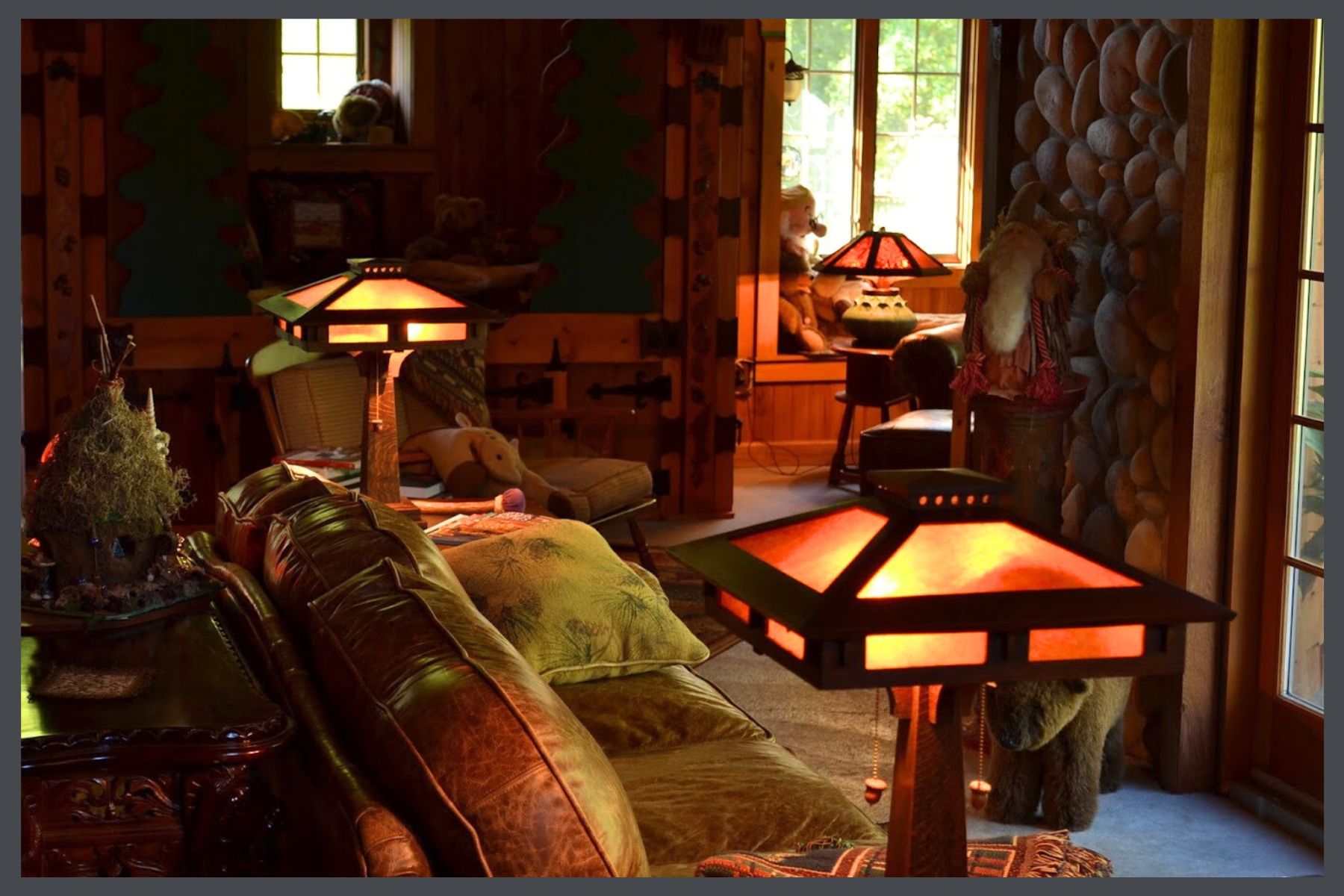
 Part 1,